Manufacturing, artificial intelligence, and business growth — October 7, 2026.
1. Micron’s largest manufacturing hub moves closer to a strike
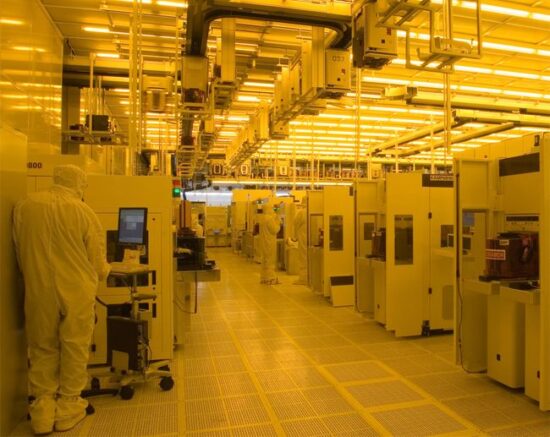
Summary: Micron’s Taoyuan union in Taiwan authorized a strike after 99% of 1,994 participating members voted in favor. The timing remains undecided. Taiwan is Micron’s largest manufacturing hub and produces DRAM and high-bandwidth memory used in AI systems.
Why It Matters.
The vote puts workforce relations inside one of the world’s most important AI supply chains. Record memory demand does not eliminate pressure over profit sharing, pay, and staffing. Because advanced-memory capacity is geographically concentrated, even a localized labor dispute can become a global availability and pricing risk.
Impact on Manufacturing.
Electronics, server, automotive, and equipment manufacturers should treat labor continuity at critical semiconductor suppliers as a production-planning variable. Alternative sourcing, buffer policies, cross-qualified designs, and supplier communication may matter as much as nominal wafer capacity when memory markets are tight.
Direct source: Reuters, October 7, 2026
2. German industrial output jumps 2% despite supply-chain disruption

Summary: German industrial production rose 2.0% in August, its strongest monthly increase since March 2025. Machinery output increased 5.3% and construction 9.3%, while automotive output fell 5.4%. The gain came despite low Rhine water levels that disrupted some material flows.
Why It Matters.
The data suggest that defense spending, digitalization, and AI investment are supporting selected parts of Europe’s largest industrial economy, but the recovery is uneven. Strong machinery and construction numbers coexist with weakness in autos, underscoring how different demand, trade, and technology pressures are reshaping sectors at different speeds.
Impact on Manufacturing.
Manufacturers should not treat an improving national index as proof that every market is recovering. Capacity, hiring, inventory, and capital decisions need sector-level demand signals. Low-water logistics also reinforce the value of alternate routes, flexible scheduling, and visibility into material constraints before they affect delivery.
Direct source: Reuters, October 7, 2026
3. Germany blocks Cosco’s proposed 80% purchase of logistics firm Zippel

Summary: Germany blocked state-owned Cosco’s proposed acquisition of an 80% stake in rail-and-truck logistics provider Zippel. Officials cited security, dependency, and supply-chain concerns even though the transaction had previously cleared antitrust review.
Why It Matters.
Governments increasingly view logistics networks, operating data, and freight access as strategic infrastructure. A transaction can satisfy competition rules yet still fail on national-security grounds. The decision also reflects Europe’s effort to reduce concentrated dependencies while preserving trade with China.
Impact on Manufacturing.
Manufacturers need ownership and geopolitical exposure in their logistics-risk maps, not only rates and transit times. Restrictions on acquisitions or operators can change routes, capacity, data access, and customer commitments quickly, making qualified alternatives and contract flexibility essential to continuity.
Direct source: Reuters, October 7, 2026
4. Japan’s $15 billion Rapidus bet still needs customers—and stable yield

Summary: Japan-backed Rapidus is working with 17 chip-design companies as it prepares 2-nanometer production. The roughly $15 billion effort still must secure anchor customers and demonstrate reliable round-the-clock yield before planned mass production in the second half of the next fiscal year.
Why It Matters.
Industrial policy can fund a fabrication plant, but it cannot purchase customer trust, process stability, or profitable yield. Rapidus could diversify advanced-chip supply and rebuild Japan’s semiconductor base, yet its commercial test is whether design partners move from evaluation to qualified, repeat production.
Impact on Manufacturing.
The program illustrates the full capital-to-revenue path for advanced manufacturing: design enablement, equipment readiness, process control, qualification, yield improvement, customer acceptance, and dependable delivery. Suppliers may gain new demand, but revenue timing depends on the fab clearing every operational gate.
Direct source: Reuters, October 7, 2026
5. 84% of U.S. voters see AI as a threat to American workers

Summary: A Reuters/Ipsos poll found that 84% of U.S. registered voters view AI as a threat to American workers. Majorities across parties support stricter regulation, and 56% favor limits on new data centers. The poll surveyed 4,506 adults, including 3,526 registered voters.
Why It Matters.
Public confidence is becoming a deployment constraint alongside cost, safety, and technical performance. Bipartisan concern about jobs, data centers, and oversight raises the likelihood of new rules and local resistance. Companies that cannot explain who benefits, who remains accountable, and how workers will adapt may face slower adoption.
Impact on Manufacturing.
Manufacturers will need worker-centered AI implementation: clear task boundaries, training, human decision rights, transparent performance measures, and credible redeployment plans. Operational gains will be more durable when automation improves safety, quality, and throughput without treating workforce consequences as an afterthought.