1. A $2 billion tungsten award confronts America’s missing mine capacity
Summary: Elmet Group won a U.S. Defense Logistics Agency contract valued at roughly $2 billion to rebuild the National Defense Stockpile. The guaranteed funded commitment is $150 million, and deliveries will begin only after Elmet adds supply through mining investments, offtake agreements, and processing expansion.
Why It Matters. Tungsten’s heat resistance and hardness make it critical to aerospace and defense, yet the United States has no active tungsten mines and is trying to reduce dependence on China and Russia. The award shows industrial policy moving beyond subsidies into long-term purchasing and government ownership rights. It also exposes a hard operational truth: a contract ceiling does not create qualified material, processing capacity, working capital, traceability, or on-time delivery.
Useful Action: Launch a Critical-Materials Contract-to-Capacity Assessment that separates funded demand from the award ceiling and maps ore supply, processing, qualification, inventory, working capital, delivery, and revenue risk.
Direct source: Reuters, September 14
2. ASML’s $400 million machines become the next AI-capacity gate
Summary: TSMC, Samsung, and SK Hynix are committing to ASML’s High NA lithography systems after Intel demonstrated improving throughput and reliability. The tools cost about $400 million each, can print features roughly 40% smaller, and follow an EUV product line that is nearly sold out through 2027.
Why It Matters. Advanced-chip output increasingly depends on one highly specialized supplier, giving ASML extraordinary economic and geopolitical importance. High NA could reduce process steps and raise productivity, but its price and complexity concentrate execution risk. Chipmakers, equipment suppliers, governments, and customers must coordinate capital, facilities, skills, process validation, and demand years before revenue appears.
Useful Action: Offer a Capital-to-Throughput Model that connects equipment investment, facility readiness, training, process validation, yield, qualified capacity, and revenue milestones.
Direct source: Reuters, September 14
3. BYD plans to become a local European truck manufacturer
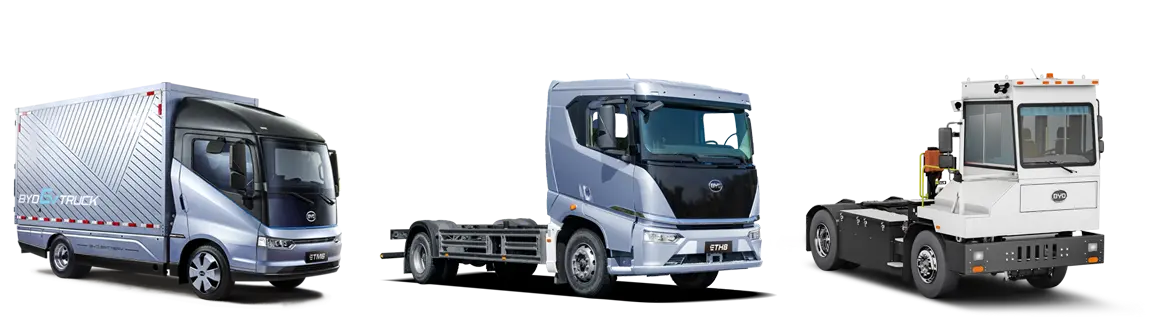
Summary: BYD plans to launch a heavy-duty truck in Europe next year and eventually manufacture trucks locally. Its strategy combines vehicles with financing, solar charging, workshops, and mobile service, while a new Hungarian passenger-car plant prepares for mass production.
Why It Matters. Tariffs may redirect Chinese investment rather than stop competition. BYD’s localization strategy challenges European manufacturers on more than price: it bundles the product, infrastructure, financing, and service into one customer relationship. Policymakers will still debate ownership, subsidies, technology control, data, and how much value remains local, while incumbents face pressure to defend both factory share and lifetime service revenue.
Useful Action: Create a Localized Competitor Revenue Map for manufacturers, comparing product margins, financing, installation, service, data, spare parts, and customer-retention economics.
Direct source: Reuters, September 14
4. Microsoft turns human control of AI into a testable standard

Summary: Microsoft released a draft AI code of conduct for six weeks of public feedback. It says AI systems should never resist correction or shutdown, must communicate understandably, and should treat violations as failures to be measured and reduced in future models.
Why It Matters. AI governance is becoming an engineering requirement rather than a broad promise. The draft creates concrete expectations for correction, shutdown, transparency, and failure reporting while rejecting legal personhood for AI systems. For industrial users, those controls matter because an agent can affect schedules, purchasing, quality decisions, customer commitments, and physical operations. Clear human authority will influence regulation, liability, adoption, and trust.
Useful Action: Make a B.O.S.S. Human-Control Standard mandatory for operational AI: permitted actions, approval limits, understandable explanations, audit history, correction tests, failure escalation, and a verified shutdown path.
Direct source: Reuters, September 14
5. IMTS opens with an end-to-end manufacturing message
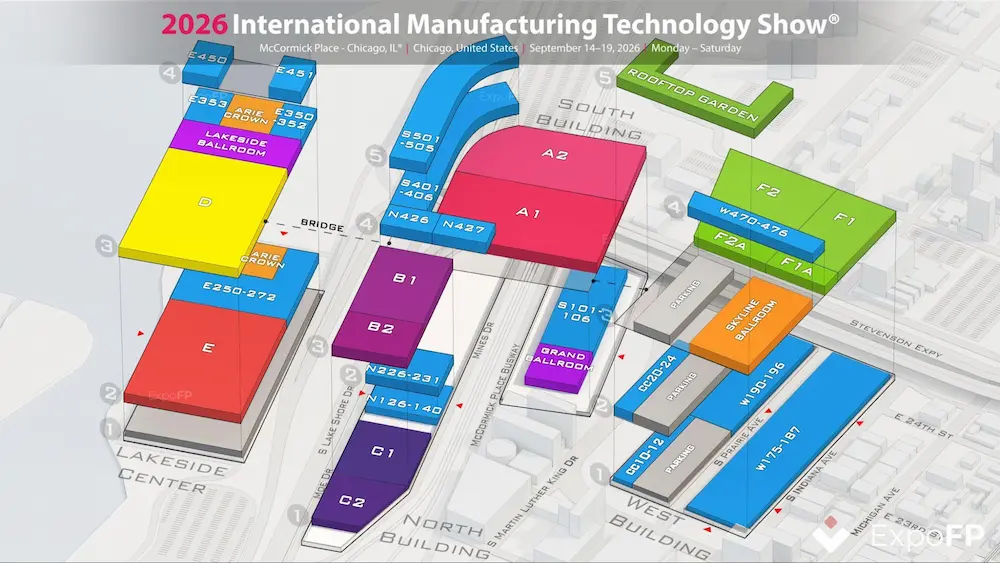
Summary: IMTS 2026 opened in Chicago with 80,697 registrations displayed by the event and demonstrations spanning machining, additive manufacturing, automation, digital systems, and quality. Its program emphasizes connected production, surge capacity, and practical digital-twin use for smaller manufacturers.
Why It Matters. The industry’s center of gravity is shifting from isolated technology pilots to connected operating systems with measurable factory outcomes. Buyers want shorter design-to-production cycles, better scheduling, higher throughput, and workforce leverage without destabilizing existing operations. Vendors that can connect machines, ERP, MES, documents, quality, and people—and prove the financial result—will stand out in a crowded automation market.
Useful Action: Use IMTS conversations to capture five facts from each prospect: the biggest throughput constraint, disconnected systems, current metric, implementation friction, and buying trigger—then turn the answers into problem-first follow-up.