Manufacturing, artificial intelligence, and industrial growth — October 12, 2026.
1. Microsoft plans million-chip Maia 300 deployment to cut AI infrastructure costs
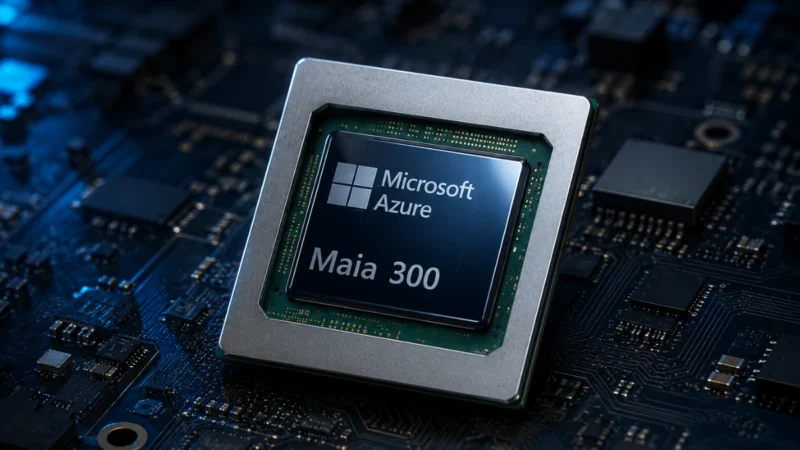
Summary: Microsoft unveiled its third-generation Maia 300 accelerator and plans multi-gigawatt deployment beginning in 2027, potentially exceeding one million chips. The chiplet design combines 2-nanometer compute dies with 3-nanometer data-management dies, and Microsoft says the system delivers about 40% more useful compute per megawatt than leading GPU-based systems.
Why It Matters. Custom silicon is turning cloud competition into vertically integrated manufacturing competition. Microsoft is trying to lower dependence on Nvidia, control total-system cost, and align chips, racks, software, power, and cooling around its own workloads. Success will depend on semiconductor yield, advanced packaging, memory supply, rack production, grid capacity, and software migration—not chip specifications alone.
Impact on Manufacturing. A million-unit ramp will pressure-test supplier qualification, chiplet assembly, advanced packaging, liquid-cooling equipment, power electronics, and data-center commissioning. Manufacturers serving AI infrastructure will need synchronized capacity plans and traceability across components whose lead times and failure modes differ substantially.
Direct source: Reuters, October 12, 2026
2. EnergyX signs $2 billion lithium contract tied to Texas and Chile production
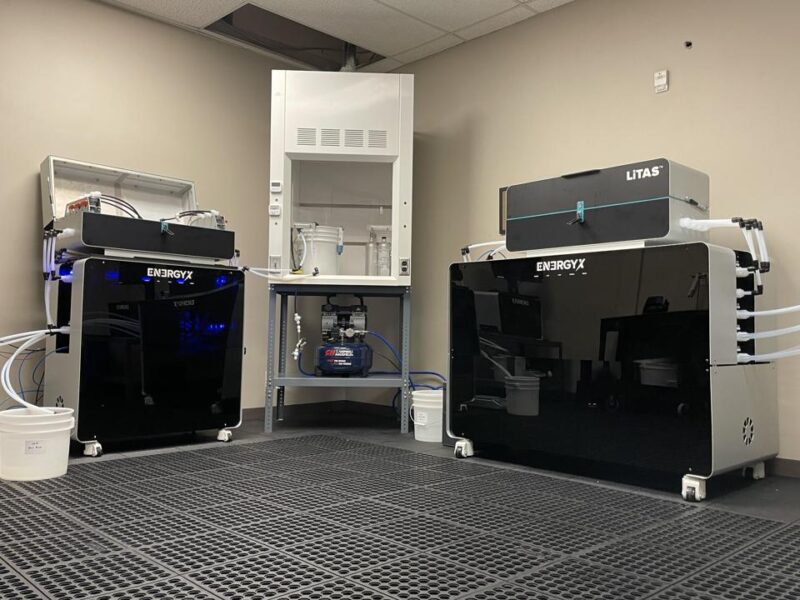
Summary: EnergyX signed a binding 10-year offtake agreement with Trafigura for 100,000 metric tons of lithium worth about $2 billion. Annual deliveries of lithium hydroxide and lithium carbonate are planned to begin in Chile in 2028 and Texas in 2029, using direct lithium extraction technology.
Why It Matters. The contract gives an emerging technology a commercial demand signal and could support EnergyX’s $690 million U.S. Export-Import Bank loan application. It also reveals an unfinished supply chain: Trafigura initially expects to sell material into China because U.S. battery-processing demand is still developing.
Impact on Manufacturing. The production challenge is converting brine chemistry and pilot-scale extraction into consistent battery-grade material at commercial volume. Recovery rates, membrane life, water handling, impurities, maintenance, customer qualification, and ramp timing will determine whether contracted tonnage becomes dependable supply for battery and storage manufacturers.
Direct source: Reuters, October 12, 2026
3. TSMC heads toward a sixth straight record-profit quarter

Summary: Analysts expect TSMC to report third-quarter net profit of about T$746.3 billion ($23.4 billion), up 65% year over year, after revenue rose 50%. Demand for 3-nanometer chips and advanced CoWoS packaging is driving the growth, while TSMC continues a planned $265 billion U.S. manufacturing expansion centered on Arizona.
Why It Matters. AI demand is rewarding the supplier that controls leading-edge process technology and scarce packaging capacity. TSMC’s widening scale advantage strengthens its negotiating power, but it also concentrates global dependence on one producer amid trade restrictions, geopolitical risk, and a costly geographic expansion.
Impact on Manufacturing. Advanced packaging is now a primary capacity constraint rather than a downstream afterthought. Customers and equipment suppliers must plan around wafer output, packaging throughput, substrates, high-bandwidth memory, test capacity, and qualified labor as one connected production system.
Direct source: Reuters, October 12, 2026
4. Zetwerk seeks a $2.64 billion valuation in India’s manufacturing IPO

Summary: Contract manufacturer Zetwerk is seeking a $2.64 billion valuation in a $518 million Indian IPO. Energy products generate about 60% of revenue, precision products for electronics, EVs, and wearables about 23%, and quarterly revenue rose more than 55% year over year as its loss narrowed.
Why It Matters. Public-market capital is testing whether a technology-enabled manufacturing network can scale across highly different products and customers. The IPO could fund debt reduction and acquisitions, but investors will scrutinize working capital, supplier control, quality consistency, customer concentration, and margins—not revenue growth alone.
Impact on Manufacturing. Distributed contract manufacturing creates flexibility only when drawings, supplier capability, inspection data, change control, and delivery commitments remain consistent across sites. Zetwerk’s next phase will depend on converting network breadth into repeatable quality, predictable throughput, and profitable utilization.
Direct source: Reuters, October 12, 2026
5. HCLTech and Anthropic form a dedicated agentic-AI business unit

Summary: HCLTech announced a partnership with Anthropic and a dedicated business unit to deploy agentic AI with an emphasis on safety, cybersecurity, and governance. HCLTech also reported AI-related quarterly revenue rising to $219 million, while clients increasingly shift traditional technology work toward outcome-based contracts.
Why It Matters. Enterprise AI is moving from isolated assistants to agents that can execute multi-step work, making governance part of the commercial offering. Outcome-based contracts also transfer more delivery risk to service providers, increasing the importance of measurable results, permissions, auditability, and exception handling.
Impact on Manufacturing. Plant-floor and supply-chain agents can accelerate planning, maintenance, quality analysis, and procurement, but only if actions stay inside defined operating limits. Manufacturers need authoritative data, human approval thresholds, cybersecurity segmentation, model-version control, and traceable decisions before autonomous workflows touch production.