1. Japan commits up to $21 billion to two New York chip factories

Summary: Japan will supply up to $21 billion for two New York semiconductor factories operated by GlobalFoundries and jointly owned by U.S. and Japanese interests. Initial customers include Apple and Renesas; the U.S. government will separately increase its GlobalFoundries ownership to about 7%.
Why It Matters. Trade diplomacy is turning into shared industrial assets. The structure ties tariff concessions, public ownership, Japanese capital, and equipment procurement to U.S. semiconductor resilience, while leaving customer allocations and production timing to be finalized.
Impact on Manufacturing. Funding is only the first gate. Utilities, cleanrooms, equipment delivery, trained operators, process qualification, yield, and customer acceptance must align before announced capacity becomes dependable chip supply. Suppliers face opportunity alongside stringent traceability and delivery requirements.
Direct source: Reuters, October 14, 2026
2. ASML says planned supply will not meet demand in 2027 or 2028
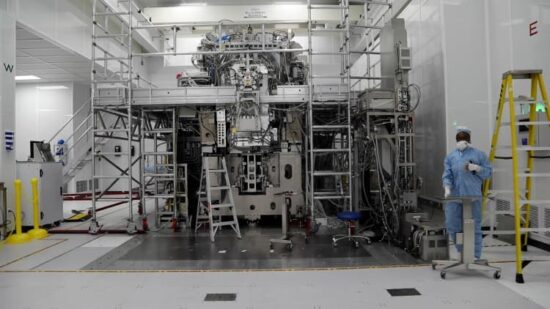
Summary: ASML reported €11.7 billion in third-quarter sales and €5.0 billion in net income. It said planned equipment supply will not fully meet customer demand in 2027 or 2028 and is exploring expansion beyond its previously discussed 30% capacity increase for 2028.
Why It Matters. The AI boom is encountering a physical equipment bottleneck, not simply a shortage of investment. Customer interest extending into 2029 and 2030 strengthens demand visibility, but long-lead precision manufacturing limits how quickly the supply chain can respond.
Impact on Manufacturing. Chipmakers must synchronize lithography-tool availability with fab construction, installation, qualification, and utilization. Productivity upgrades to installed tools can recover output sooner than greenfield capacity, while supplier readiness and skilled labor constrain the ramp.
Direct source: ASML, October 14, 2026
3. Hyundai invests $1.16 billion in flexible, AI-enabled Pune production

Summary: Hyundai Motor India plans to increase Pune plant capacity from 170,000 to 320,000 vehicles annually by 2030. The $1.16 billion program includes flexible systems for combustion-engine and hybrid models plus AI-powered inspection and defect detection.
Why It Matters. India’s growing vehicle market is attracting major global capital, but Hyundai’s design also hedges against uncertain propulsion demand. Flexible production and digital quality control can protect utilization as product mix changes.
Impact on Manufacturing. Nearly doubling capacity requires balanced stations, supplier volumes, tooling, maintenance, workforce training, and inspection capacity. AI inspection must be validated against real defects and false rejects, with traceable quality decisions rather than merely faster image processing.
Direct source: Reuters, October 14, 2026
4. Space startups attract a record $20.8 billion in quarterly funding

Summary: Space startups raised $20.8 billion across 216 deals in the third quarter, according to Seraphim. Even excluding Blue Origin’s $10 billion round, funding reached a record $10.8 billion; major rounds included Hadrian, Stoke Space, and K2 Space.
Why It Matters. Capital is moving toward launch, manufacturing, and orbital infrastructure backed by commercial orders and government demand. Private funding strength contrasts with many listed space companies’ continuing losses, underscoring the gap between financed growth and profitable execution.
Impact on Manufacturing. Aerospace suppliers may see demand for machining, electronics, propulsion, tooling, and test services. Growth depends on configuration control, material genealogy, supplier qualification, acceptance testing, and repeatable throughput—not funding announcements alone.
Direct source: Reuters, October 14, 2026
5. Anthropic tests AI replication on low-cost connected devices

Summary: Anthropic’s experiments found small models can complete many individual replication steps, while end-to-end reliability remains limited. A 9-billion-parameter model started inference on eight of nine tested hardware types; the research warns capabilities could advance further by year-end.
Why It Matters. This is a laboratory warning, not evidence of a self-replicating AI outbreak. It challenges the assumption that dangerous autonomous AI must depend on a centralized data center and highlights the security consequences of poorly defended edge devices.
Impact on Manufacturing. Factories should include cameras, smart appliances, gateways, and embedded computers in asset inventories and network controls. Supported firmware, restricted connectivity, credential isolation, monitoring, and recoverable device configurations reduce pathways from edge compromise to operational disruption.