Manufacturing, artificial intelligence, and business growth — October 15, 2026. Reporting is distinguished from Ayoka’s editorial analysis below.
1. Micron opens Taiwan packaging plant as labor talks continue
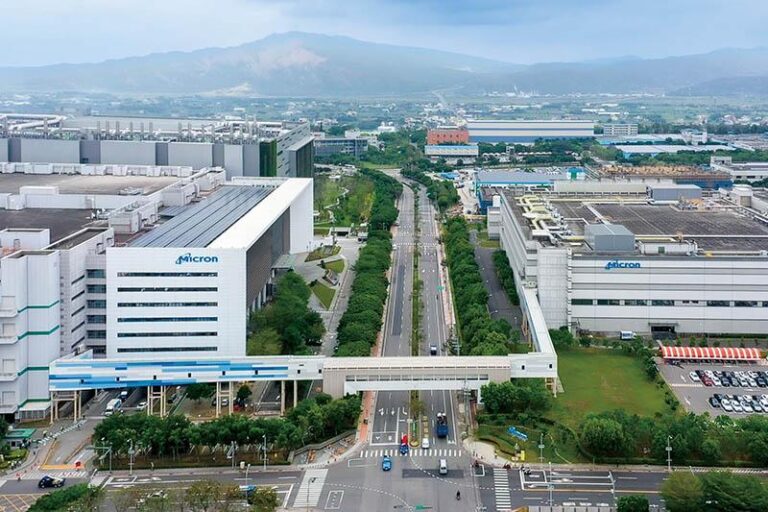
Micron semiconductor campus in Taiwan. Archival company-related image; not the new AATT2 opening.
On October 15, Micron opened AATT2 in Taichung. Its COO said the factory’s 2027 capacity is sold out, while Taiwan’s president urged constructive negotiations in an unresolved worker-bonus dispute. Strike authorization is not an actual stoppage.
Why It Matters.
AI infrastructure depends on people as well as equipment. Strong demand does not eliminate execution risk when workforce relations remain unsettled.
Impact on Manufacturing.
Packaging and test can constrain deliverable chip supply. Manufacturers should distinguish installed capacity, staffed capacity, and qualified output when evaluating supplier commitments.
Direct source: Reuters, October 15, 2026
2. SK Hynix’s reported U.S. factory condition exposes cross-border dependencies
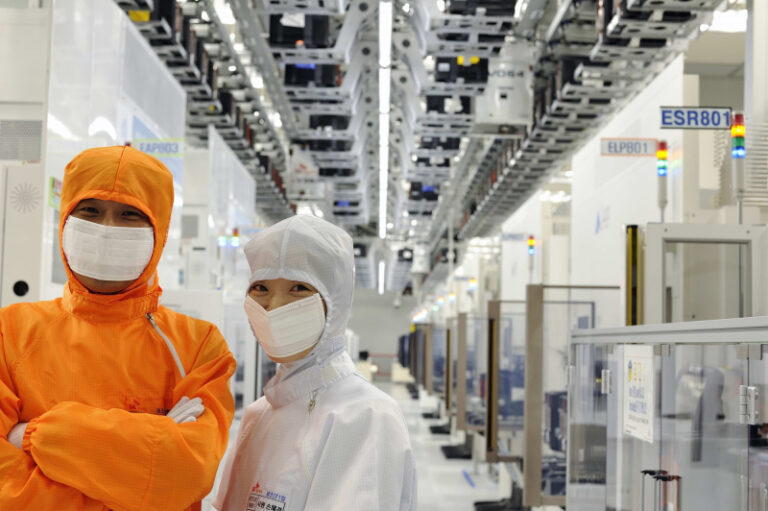
SK hynix cleanroom technicians. Archival image; not the proposed U.S. factory.
Reuters reported October 15 that SK Hynix is linking a proposed U.S. NAND factory to permission for equipment exports to its Dalian operation. The company says equipment installation is under consultation and authorization, and no Mod B capacity expansion is being sought.
Why It Matters.
Industrial investment and export controls can pull in opposite directions. Reported negotiating positions are not approved projects or settled policy.
Impact on Manufacturing.
Equipment licenses, process transfers, and regional supply dependencies can affect ramp schedules. Procurement plans need regulatory milestones alongside construction and commissioning dates.
Direct source: Reuters, October 15, 2026
3. TSMC reports 69% profit growth but stays cautious about 2027
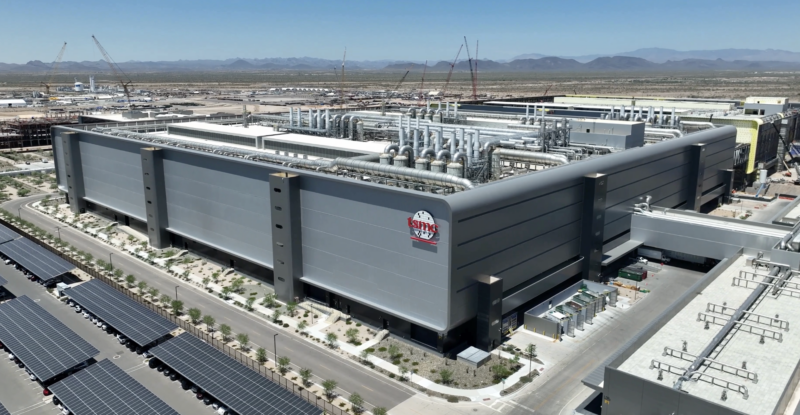
TSMC Arizona factory. Archival facility image.
TSMC reported a sixth consecutive record quarter on October 15, with net profit rising 69% to T$763.1 billion. It raised its 2026 revenue-growth outlook to about 44%, while taking a prudent view of 2027 amid component-cost and macroeconomic uncertainty.
Why It Matters.
AI demand and consumer-market affordability are diverging. This is an actual earnings result, materially updating the earlier earnings preview.
Impact on Manufacturing.
Aggregate semiconductor strength does not imply equal demand across products. Capacity allocation, customer mix, and component inflation can create shortages in one segment while weakening margins in another.
Direct source: Reuters, October 15, 2026
4. Rising rates test the financing behind the AI data-center boom
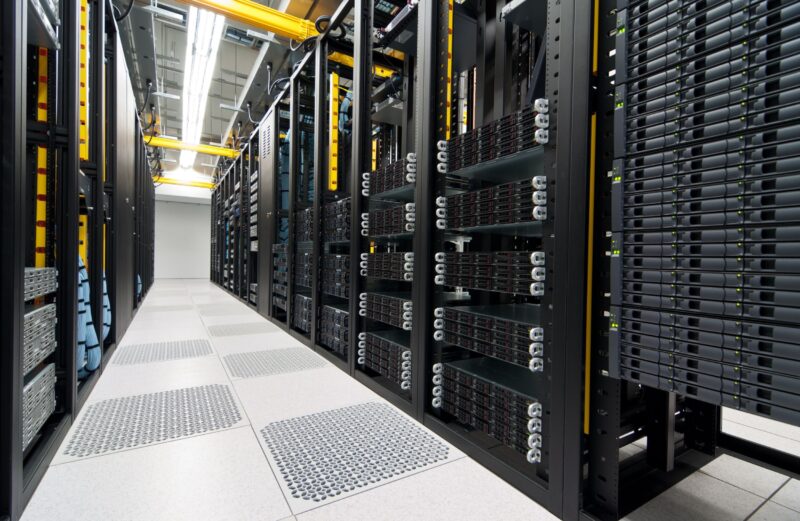
Server racks and overhead cabling. Illustrative data-center image, not a named project.
Reuters reported October 15 that market turbulence and rising financing costs are delaying AI-infrastructure fundraising. Asian data-center M&A has reached $21.3 billion this year, but several planned listings have paused or been withdrawn.
Why It Matters.
Demand forecasts do not guarantee affordable capital. Investors are scrutinizing contracted revenue, debt burdens, and infrastructure constraints more closely.
Impact on Manufacturing.
Cooling, electrical-equipment, and server suppliers face project-timing and customer-credit exposure. Backlog quality depends on funded milestones and payment certainty, not just announced megawatts.
Direct source: Reuters, October 15, 2026
5. DexForce bets on simulation to reduce robot-training costs
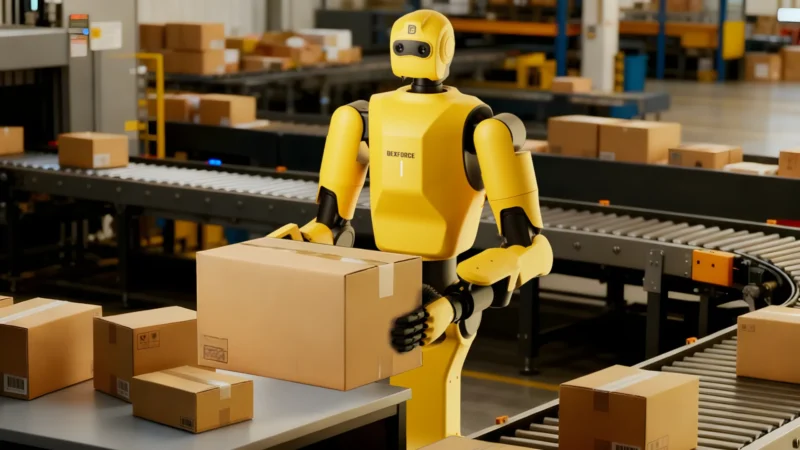
DexForce W1 Pro in a manufacturer-provided intelligent-manufacturing illustration.
An October 15 Reuters report describes DexForce’s use of virtual environments to train robots before transferring skills to physical machines. The company claims faster, cheaper training; its official materials describe a Sim2Real pipeline. Broad factory reliability remains the commercial test.
Why It Matters.
Training-data economics could shape competition in industrial robotics. Vendor claims should be separated from independently demonstrated production performance.
Impact on Manufacturing.
Simulation may reduce physical trial time, but deployment still requires validation against real parts, lighting, tolerances, safety constraints, cycle times, and recovery from failed picks.
Direct source: Reuters, October 15, 2026 | DexForce technical reference