Tank Container Fleet Management Software | ITT Case Study | Ayoka
Ayoka Systems · Case Study · ITT

Custom Tank Container Fleet Management & Logistics Integration Software for ITT

Goals: Streamline quoting with AI enabled order entry, automate job costing using the latest supplier pricing, calculate new delivery routes based on shipping costs, and reconcile vendor costs with invoicing for accurate and timely COGS. Ayoka enabled Intermodal Tank Transport to connect the operational and financial sides of its business from quoting and route costing through tank assignments, EDI notifications, automated shipping and compliance documents, and invoicing. The system captures additional charges, demurrage, and fuel surcharges that vary by market.

Tank-container operationsPurpose-built workflows around the operation
Sage + DocuWareConnected accounting and document workflows
EDI + booking APIsEnterprise customer and logistics integration
Quote → job → financialsShipment economics carried through execution
The business problem

Job costing with variable supplier pricing

Each movement type, from door-to-door, door-to-port, port-to-door, or port-to-port, introduced a different combination suppliers, regulations and costs. The software accounted for varying costs and requirements that could change based on the product being shipped, whether the load was food or chemical, where the tank moved, which countries were involved, whether cleaning or HAZMAT/SDS documentation was required, or cold-weather or temperature requirements affected the shipment.

Automation enabled operators to have the latest job costing information, then alter specific movements to protect profits based on the latest sea lane charges, weather conditions, time-based fees, fuel surcharges or extra fees.

01

Protect quoted margin

Bring customer terms, vendor costs, route movements, product/equipment requirements and expected profit into the quotation workflow.

02

Recover job expenses

Carry quoted economics into the job and create explicit treatment for additional charges and cancellation-related costs.

03

Capture time-based revenue

Use tank-level dates, free-day allowances and applicable rates to support demurrage processing and billing workflows.

Connected operating model

From commercial promise to operational execution to financial closeout.

The value came from connecting the handoffs that otherwise become spreadsheets, emails, duplicate entry and institutional memory.

1. QuoteCustomer, product, route, vendor tariffs, equipment and expected margin.
2. JobCreate the operational job and tank orders from the approved commercial structure.
3. ExecuteAssign tanks, manage movements, bookings, documents, depots and exceptions.
4. IntegrateEDI, DocuWare, INTTRA, customer/vendor data and related services.
5. FinancialsActual costs, additional charges, demurrage, revenue and job-level review.
6. AccountingSage mappings, batch processing, closeout and reporting.
Quote costing & margin protection

Pricing is evaluated, not merely entered.

Tank Tracker 2 could assemble cost information from the characteristics of a shipment and present estimated cost, selling rate, expected profit and margin before the customer price was committed.

  • Customer-specific terms and conditions
  • Country, location and route-dependent costs
  • Product and equipment requirements
  • Vendor transportation rates and movement costs
  • Less obvious charges such as repositioning and time-based equipment costs
Source-based reconstruction of Tank Tracker 2 quotation overview showing quote cost, selling rate, profit and margin
Built to evaluate margin before the quote becomes a commitment.
Source-based reconstructed UI with fictional sample data; not a production screenshot.
Route & movement economics

The shipment route carries its own economics.

The quotation workflow represented ordered transport movements, vendors, ITT costs and selling rates so the commercial structure could reflect the actual route rather than rely on a single undifferentiated price.

This becomes particularly important when a shipment crosses modes, ports, depots, countries or customer-specific handling requirements.

Source-based reconstruction of Tank Tracker 2 quotation movements showing transport legs, vendors, costs and revenue
Ordered movements connect operational routing to quoted cost and revenue.
Source-based reconstructed UI with fictional sample data; not a production screenshot.
Business rules that standard software may miss

Software rules changed with the product, tank, route and destination.

Product, tank, route and destination changed the operating rules. The workflow itself could change based on what was being shipped and where it was going.

Food vs. chemical

Different products can drive different tank eligibility, cleaning and documentation requirements.

HAZMAT / SDS

Hazardous-material and safety-document requirements can become part of the job workflow.

Temperature

Winter conditions, intermediary cold locations or product requirements may create tank-heating or temperature-handling actions.

Country & route

Country, location, port and movement choices can alter operational requirements and charges.

Job financial control

Quoted economics were carried into the work.

When an approved quote became a job, the operational structure could carry forward tank orders, movements, vendor relationships and charge records. Additional costs then became explicit financial decisions rather than informal exceptions.

  • Review total costs and revenue at the job level
  • Approve or hold additional costs
  • Classify charges for billing treatment
  • Preserve incurred costs when a job changes or is cancelled, where applicable
Source-based reconstruction of Tank Tracker 2 job financial screen with costs, revenues and additional-charge review
Financial controls connect execution to cost recovery and revenue visibility.
Source-based reconstructed UI with fictional sample data; not a production screenshot.
Systems integration

Operations worked from a system built around the workflow.

SageERP/accounting integration, financial mappings, batches and closeout-related workflows.
DocuWareJob documents, vendor invoices, supporting records, depot information and accounting access to source documents.
EDILogistics and billing messages with large enterprise customers including BASF, Coca-Cola and others.
INTTRAREST-based booking and cancellation workflow from the operating system.
MarineTrafficIntegration work began to improve visibility into vessels carrying containers; do not present as fully deployed without validation.
AWS / application servicesSupporting application, document and background-processing infrastructure in the reviewed system.
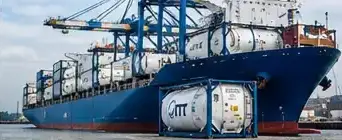
Illustrative tank containers at a maritime port
Documents & job-cost evidence

Documents were tied back to the operational job.

DocuWare integration helped connect the paperwork surrounding a shipment to the work itself. Returned-tank information from depots, job documents and supplier invoices could be available to the teams responsible for operations and accounting.

Vendor invoices could also be matched into job-cost workflows, reducing the gap between “what happened operationally” and “what did this shipment actually cost?”

Source-based reconstruction of Tank Tracker 2 job documents screen showing booking, bill of lading and tank certificate records
Supporting documents remain connected to the job instead of living in a separate operational silo.
Source-based reconstructed UI with fictional sample data; not a production screenshot.
Enterprise EDI

Large customers required systems to talk to systems.

Ayoka implemented EDI workflows supporting logistics and billing interactions with major ITT customers, including BASF and Coca-Cola. The platform supported message-level status and review so integration activity could be visible rather than hidden inside an interface.

Partner-specific message standards and mappings should be described only where ITT confirms the exact implementation.

Source-based reconstruction of Tank Tracker 2 EDI inbound messages screen showing partner, message type and processing status
EDI turns customer and logistics transactions into managed system workflows.
Source-based reconstructed UI with fictional sample data; not a production screenshot.
Tank planning

The physical asset still has to fit the job.

Tank planning connected demand for equipment to the available tank pool, with filters for product categories, region, equipment needs and tank availability. Assignment could affect vendor charges, tank history, movement activity and EDI events.

This is where the platform becomes more than a financial application: the commercial model and the physical fleet have to stay synchronized.

Source-based reconstruction of Tank Tracker 2 tank planning screen showing waiting assignments and available tanks
Tank planning helps match the physical fleet to the commercial and operational job.
Source-based reconstructed UI with fictional sample data; not a production screenshot.
Demurrage revenue protection

Time with the tank can become a billable event.

Tank Tracker 2 included logic for actual dates, free-day allowances, applicable rates, prior billing periods and the individual tank order — supporting the identification and processing of demurrage without relying on ad hoc date tracking.

Actual arrival & return dates

Establish the elapsed-time basis for a tank-level charge.

Free days & rates

Apply the commercial terms that determine the amount.

Billing-through date

Support subsequent periods without intentionally duplicating prior billing periods.

Job & invoice records

Connect the time-based charge back to the equipment and shipment.

Bottom line: Ayoka did not simply digitize tank movements. The system embedded financial awareness into the process of quoting, moving and billing for tank-container shipments.
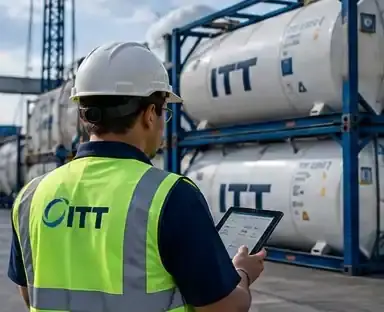
Illustrative industrial tank container depot
Why custom software

ITT needed an operational layer connecting quoting, tank movements, documents, customers, vendors and financial systems.

The specialized rules lived across customers, products, tanks, routes, depots, documents, customer integrations and financial systems. Ayoka’s role was to connect those pieces into the workflow the business actually had to run.

That is the pattern Ayoka sees in other complex operations: the ERP, TMS, document system and customer portals may each do their jobs, but the business still depends on spreadsheets, manual handoffs or institutional knowledge to bridge the gaps.

Frequently asked questions

Tank-container software & integration FAQs

When should a tank-container operator consider custom software instead of a standard TMS?
Custom software becomes relevant when important customer, product, route, document, accounting or compliance rules do not fit cleanly inside a standard transportation management system, or when multiple existing systems need to function as one operating workflow.
How can tank-container software help protect shipment margin?
By connecting quotation costing to actual execution. Expected costs, vendor charges, route-dependent costs, additional charges and time-based fees can be made visible earlier and carried into the financial workflow. That supports pricing discipline, cost recovery and revenue visibility without guaranteeing a specific financial result.
Can the workflow change for food, chemicals, HAZMAT or temperature-sensitive shipments?
Yes. A purpose-built operating system can apply different rules based on product, equipment, route, country, cleaning requirements, HAZMAT/SDS requirements and temperature conditions.
Can tank-container software exchange EDI messages with large customers?
Yes. Ayoka implemented logistics and billing EDI workflows for ITT, including integrations with major customers such as BASF and Coca-Cola. Message standards and partner-specific mappings vary by customer.
Can logistics software integrate with DocuWare?
Yes. Ayoka integrated DocuWare into ITT workflows involving job documents, vendor invoices, depot-supplied information and supporting records used by accounting and operations.
Can tank container software integrate with Sage ERP?
Yes. In the ITT engagement, Ayoka integrated the operational platform with Sage so financial and operational records could be connected. Exact posting, mapping and closeout rules should be validated for each implementation.
What is tank container fleet management software?
Tank container fleet management software coordinates the commercial, operational and financial workflows associated with tank-container shipments. Depending on the operator, that can include quotations, routing, tank assignment, documents, EDI, job costs, billing and time-based charges such as demurrage.
Start with the operational problem

Is your logistics operation being held together between systems?

Tell us where the process breaks down — quoting, documents, customer integrations, tank or asset visibility, vendor costs, billing, job costing or something that only works because one person knows how to manage the exceptions.

Start the Conversation

Tell us what you’re seeing. We’ll start with the operational problem and help determine what is getting in the way.

Captcha