October 22, 2026 | Five current manufacturing and AI developments. Analysis reflects announced plans and distinguishes expected benefits from delivered results.
1. Schaeffler and Wandelbots target lower-cost robotics across plants

Image: Wandelbots. Partnership announcement image.
Schaeffler announced an October 22 technology partnership with Wandelbots to develop a physical-AI platform for industrial and humanoid robotics. The companies aim to make NOVA available across Schaeffler’s plants and target automation lifecycle-cost reductions of up to 40%; that figure is an objective, not a verified network-wide result.
Why It Matters.
Competition is shifting toward reusable automation software and engineering knowledge. Sharing validated applications across sites could reduce dependence on repeated custom programming, although integration and deployment performance will determine the value.
Impact on Manufacturing.
Reusable robot skills and virtual commissioning could shorten changeovers and deployment engineering. Plants still need local validation of tooling, cycle time, safety and quality: a transferable program does not make different production conditions identical.
Source: Schaeffler — 2026-10-22
2. Houston solar-tracker expansion moves more assembly into the factory
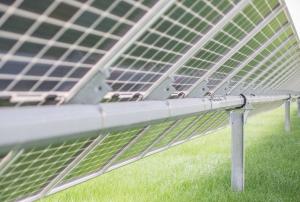
Image: PV Hardware, supplied with its October 21 press release; product illustration.
PVH USA announced October 21 that its original Houston facility will add about 34,200 square feet. The company expects the expansion to enable 35% more production of pre-assembled components. Its approach shifts work from solar construction sites into a controlled manufacturing environment.
Why It Matters.
Constrained field labor and unpredictable installation schedules are encouraging manufacturers to sell easier execution alongside hardware. Domestic pre-assembly can change where project risk, labor and working capital sit in the supply chain.
Impact on Manufacturing.
Factory pre-assembly can improve repeatability and reduce site handling. It also increases the importance of complete kits, configuration control and shipment sequencing: a finished assembly only creates customer value when the right version reaches the right installation crew on time.
Source: PV Hardware / EIN Presswire — 2026-10-21
3. Corning plans $585 million Wilmington fiber expansion
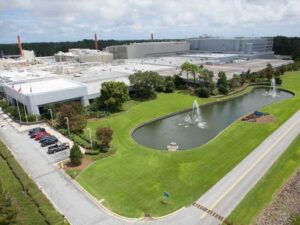
Image: Corning via Wilmington Business Development.
Wilmington Business Development announced October 21 that Corning plans a $585 million expansion and 414 additional jobs at its Wilmington, North Carolina, campus. Hiring is expected over five years. The project supports next-generation networks amid demand from AI-network operators and telecommunications customers.
Why It Matters.
AI infrastructure demand extends into physical materials and established industrial regions. Performance-based local incentives and technician development connect the project’s economic benefits to actual investment and hiring.
Impact on Manufacturing.
Adding fiber capacity requires coordinated equipment commissioning, technician training and process qualification. Production growth must preserve consistency and yield; construction completion alone does not establish reliable saleable output or customer delivery capacity.
Source: Wilmington Business Development — 2026-10-21
4. BAE Systems buys Colorado site for a planned 2028 production opening
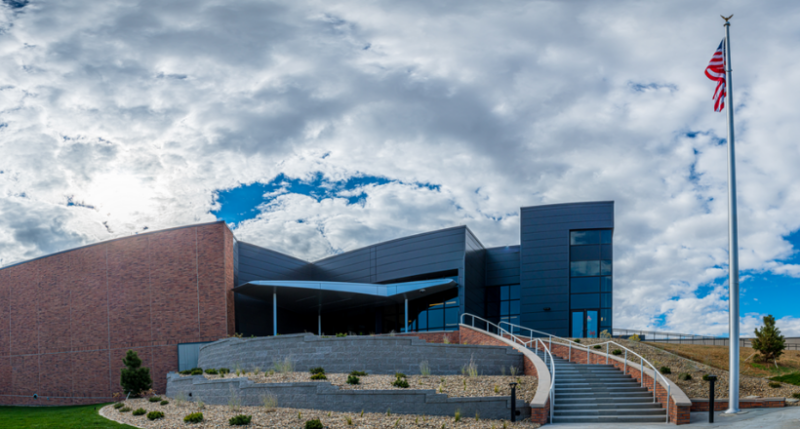
Image: BAE Systems careers. Existing Westminster facility, not the new Weld County site.
BAE Systems said October 21 it has purchased a 130,000-square-foot Weld County, Colorado, facility for space hardware and sensor production. It expects more than 200 hires over 12–24 months and approximately 600 employees at full capacity. Production is anticipated to begin in early 2028 after retrofitting and equipment procurement.
Why It Matters.
The expansion strengthens an existing aerospace manufacturing cluster while increasing competition for skilled technical workers and suppliers. The gap between acquisition and production illustrates the long lead time involved in adding specialized industrial capacity.
Impact on Manufacturing.
A successful ramp depends on qualified processes, material traceability, workforce readiness and synchronized supplier deliveries. Headcount and floor space are inputs; schedule reliability depends on when equipment, trained teams and accepted production processes become available together.
Source: BAE Systems — 2026-10-21
5. Arclin expands Nomex capacity in Spain, with commissioning planned for 2028

Image: Arclin, via its syndicated press release.
Arclin announced October 22 a multimillion-dollar investment in Asturias, Spain, to expand Nomex floc capacity and add Nomex paper production. Construction is expected to finish by the end of 2027, with full commissioning planned for early 2028. The company links demand to aerospace, electrical infrastructure and transportation applications.
Why It Matters.
Specialized insulating materials can constrain downstream production even when major equipment is available. Additional supply could strengthen resilience, but announced capacity will not provide immediate relief before commissioning and customer qualification.
Impact on Manufacturing.
Manufacturers relying on high-performance insulation must align approved material specifications with actual supplier ramp dates. More nominal capacity does not immediately translate into interchangeable qualified supply; yield, consistency and application-specific acceptance remain critical.
Source: Arclin / PR Newswire, syndicated by AOL — 2026-10-22