November 16, 2026 — Five sourced developments affecting manufacturing investment, production capacity, industrial supply chains and AI infrastructure. Images are illustrative editorial photographs, not images of the named facilities or events.
1. Samsung SDI secures 16 GWh U.S. energy-storage battery order
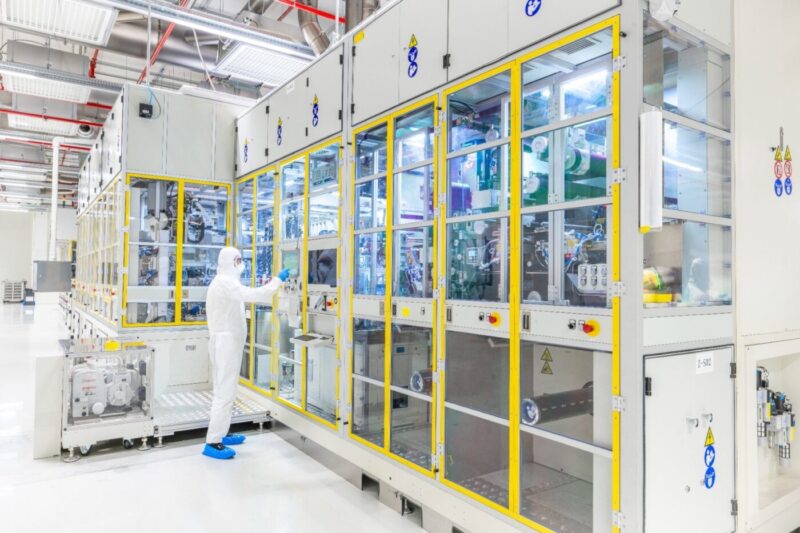
Illustrative editorial image; not a photograph of the reported event.
Summary. Samsung SDI announced a three-year agreement to supply 16 GWh of lithium-iron-phosphate batteries to Jupiter Power beginning in 2029. The cells will be made at the StarPlus Energy facility in Indiana; the companies’ combined contracted volume is now about 27 GWh.
Why It Matters.
This contract signals utility-scale demand for domestically produced storage cells and a push to diversify sourcing beyond China. Contracted future demand can support capital planning but does not guarantee each project will be completed on schedule.
Impact on Manufacturing.
Battery manufacturers need coordinated cell chemistry, material qualification, capacity planning and high-volume quality controls. Utilities and equipment suppliers must plan integration and deliveries around actual production ramps rather than headline gigawatt-hour commitments.
Original news source: Samsung SDI, November 16, 2026
2. Tesla announces €3 billion expansion of its German factory
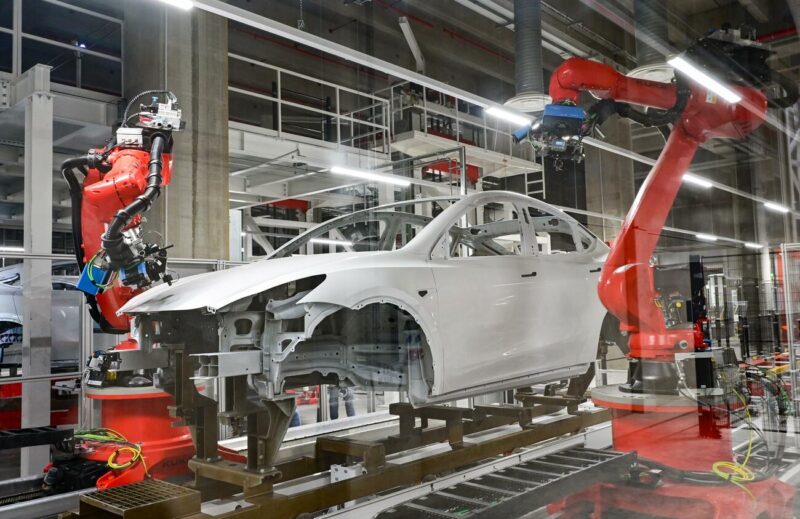
Illustrative editorial image; not a photograph of the reported event.
Summary. Tesla announced plans to invest about €3 billion at its Grünheide site near Berlin, including an additional facility intended to support production of up to one million Cybercabs. Permit applications are planned before year-end, with construction targeted for 2027 and production for 2029.
Why It Matters.
The proposal is a substantial commitment to European vehicle manufacturing amid intense competition and weak demand for several incumbent producers. Proposed capacity should not be confused with an approved factory or confirmed future orders.
Impact on Manufacturing.
Factory expansion requires equipment lead-time planning, tooling, supplier validation, staffing, logistics and reliable production ramp-up. Automotive suppliers should distinguish target capacity from firm purchase orders when investing in their own lines.
Original news source: Reuters, November 16, 2026
3. Renault plans 1,650 EV production hires while proposing office-job cuts
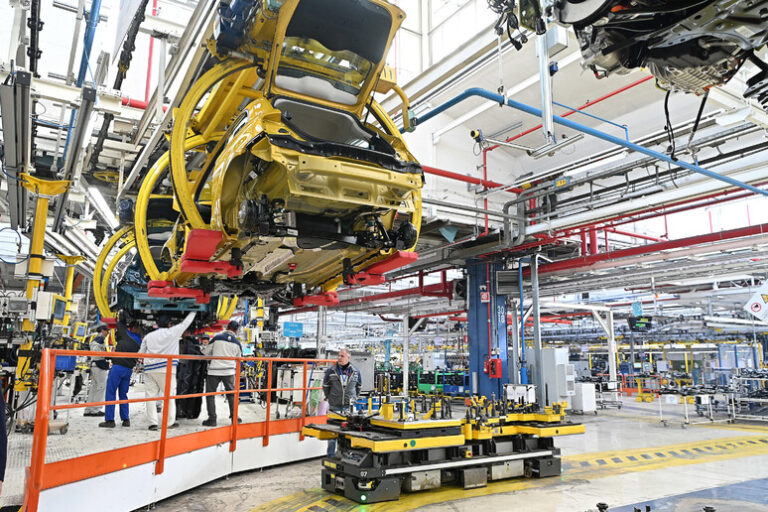
Illustrative editorial image; not a photograph of the reported event.
Summary. Renault plans to add approximately 1,650 factory production jobs in France by 2028 to support electric-vehicle demand while proposing up to 1,000 white-collar job reductions, Reuters reported, citing sources. The changes remain subject to discussions with worker representatives and include significant retraining.
Why It Matters.
The contrasting hiring and reduction plans show how manufacturers can expand physical output while reorganizing overhead and engineering work. Labor negotiations, workforce skills and vehicle demand will influence the outcome.
Impact on Manufacturing.
Higher EV output depends on training operators, balancing assembly stations, qualifying components and coordinating upstream suppliers. Changing engineering and support organizations can also affect maintenance, quality, and the speed of production problem-solving.
Original news source: Reuters, November 16, 2026
4. U.S. expands controls on remote access to advanced AI chips

Illustrative editorial image; not a photograph of the reported event.
Summary. The U.S. Commerce Department announced licensing requirements affecting advanced AI chips used through facilities in Singapore, Thailand, Malaysia, Indonesia and Brazil, Reuters reported. The policy targets potential circumvention of controls on Chinese access to U.S. computing technology.
Why It Matters.
Controls are moving beyond physical shipments to where sensitive computing capacity can be accessed and used. Cross-border AI infrastructure operators face greater compliance complexity and possible uncertainty in procurement and deployment.
Impact on Manufacturing.
Chip makers, server assemblers and industrial AI system integrators may need stronger end-user verification, component traceability, deployment documentation and contingency plans for delayed licenses. Factory AI rollouts dependent on high-performance computing should account for regulatory lead times.
Original news source: Reuters, November 16, 2026
5. Eurozone industrial production rises modestly as energy costs weigh
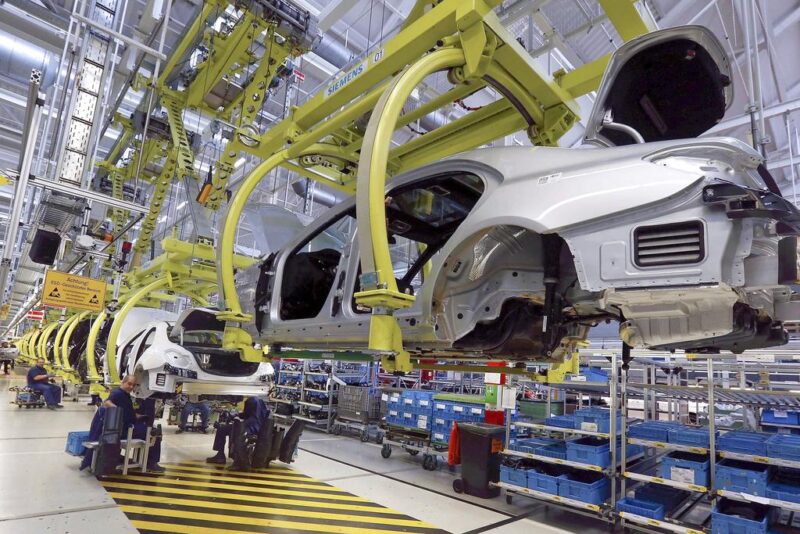
Illustrative editorial image; not a photograph of the reported event.
Summary. Eurozone industrial output rose 0.2% in September from August, according to data reported by The Wall Street Journal on November 16. The increase fell below a consensus forecast of 0.5%, while elevated energy costs continued to pressure manufacturing conditions.
Why It Matters.
A modest production rebound is positive but not enough to establish a sustained industrial recovery. Energy prices, financing conditions and external demand remain material risks for European factories.
Impact on Manufacturing.
Manufacturers should monitor production volume separately from sales value, track cost per unit and plant utilization, and test whether order backlogs justify adding shifts or capacity. High utility costs can alter the economics of energy-intensive production.
Original news source: The Wall Street Journal, November 16, 2026